University of Illinois Case Study
Above the Crowd: How University of Illinois Secures Campus Events
The Mission at Hand
The University of Illinois uses SkySafe to monitor and respond to drone activity across major campus events and facilities. SkySafe helps officers quickly locate operators, reduce unauthorized drone incidents, and improve event security through real-time airspace awareness.


Customer Overview
The University of Illinois oversees one of the most complex public safety environments in higher education. With sold-out football games, nationally recognized marathon events, protected research facilities, a commercial airport, and large public celebrations, the department needs a more effective way to monitor and respond to drone activity across campus.
The Problem

The University of Illinois faced increasing drone activity across campus and during major public events. With large crowds attending football games, basketball games, graduation ceremonies, marathons, and community celebrations, monitoring drone activity became an increasingly important public safety priority. Officers relied heavily on visual observation and radio communications to identify and track drones during live events.
Before implementing a drone detection system, the department's response capabilities were largely reactive and resource-intensive. Officers depended on eyewitness reports and visual observation from command posts, often without knowing whether a drone was authorized to operate. Locating operators in crowded environments was especially challenging, and flights over large gatherings raised significant safety concerns. Personnel were frequently diverted from other security responsibilities to investigate drone activity without reliable flight information or operator locations.
Lieutenant Laura Tison described game day operations as highly manual, with officers attempting to track drones from observation points while coordinating searches over radio. During one football game, a drone entered stadium airspace and hovered near a sniper observation post while play continued. Despite deploying 10 to 15 officers to search the surrounding area, the department could not locate the operator. The incident reinforced the need for persistent drone detection and better operational visibility.
"The first time a drone hovered over our stadium during a live game and we couldn’t locate the operator, we knew we could never go unmonitored again."
Captain Joe McCullough, University of Illinois

Building Airspace Awareness for Large-Scale Campus Events
The Solution
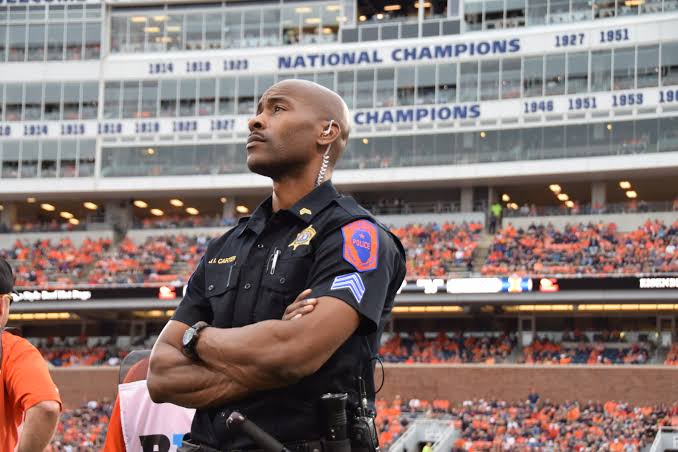
The University of Illinois implemented SkySafe's drone detection and airspace intelligence system to establish persistent visibility across campus and major event venues. The technology supports multiple operational priorities simultaneously, including Gies Memorial Stadium, campus research facilities, high-density student areas, athletic venues, the university airport, and other large public gathering spaces.
With SkySafe, the department established a coordinated drone monitoring program combining real-time detection, operator location, and historical flight records. Command staff can monitor drone flight paths, identify launch locations, locate operators during active incidents, and review historical activity to support investigations. This provides officers with actionable information while drones are airborne and documented evidence after flights conclude.
During the 2024 football game against Kansas, SkySafe detected a drone hovering above the 50-yard line during live gameplay. The system tracked the flight and identified the operator's location at an apartment complex several blocks from the stadium. Officers located the operator, verified the drone's serial number, and documented flight records to support an arrest and subsequent criminal charges.
The department also incorporated its existing drone authorization procedures into its operational workflows. A centralized registry identifies approved operators, authorized media and athletics flights, and department-owned drones, using color-coded classifications to distinguish known aircraft from flights requiring further investigation. This allows command staff to assess drone activity more quickly and direct officers toward incidents requiring attention.
SkySafe's technology also became part of the department's broader command center modernization efforts. Operational capabilities include body-worn camera feeds, weather monitoring, real-time communications, AI-assisted tools, and encrypted radio coordination. Automated text and email alerts notify designated personnel when drone activity is detected within established monitoring zones, supporting faster response without continuous manual observation.
The Results
The department experienced a substantial reduction in drone incidents requiring officer intervention during football games. Before establishing its monitoring program, officers regularly responded to four to six drone incursions per game, sometimes managing multiple incidents simultaneously and diverting personnel from other event security responsibilities.
Following deployment and expanded public awareness of drone enforcement, incidents declined to a single operator intervention over an entire football season. The department attributes much of this improvement to deterrence and education, as drone operators became increasingly aware that flights around campus events were being monitored.
SkySafe also transformed incident response from manual searches into coordinated, data-informed investigations. Rather than relying on visual sightings to locate drone operators, command staff can monitor active flights, identify operator locations, communicate directly with responding officers, and preserve flight records. These capabilities support more efficient investigations and faster incident resolution.
Lieutenant Tison noted that drone monitoring, once a significant demand on command post resources, now requires considerably less staff time because detection and response workflows are more efficient. The system supports public safety operations around stadium crowds exceeding 60,000 attendees, fireworks displays, marathons, graduation ceremonies, and sensitive research facilities.
Beyond major events, the university can review historical drone activity near campus facilities and assist neighboring law enforcement agencies with investigative requests. Persistent monitoring and access to historical flight records provide valuable context for identifying recurring activity, documenting incidents, and supporting coordinated public safety operations.
Conclusion
With SkySafe's drone detection and airspace intelligence technology, the University of Illinois established a comprehensive monitoring program supporting major athletic events, public gatherings, and critical campus facilities. The system enables officers to detect and investigate drone activity, identify operators, document incidents, and respond more efficiently while reducing demands on personnel. Today, drone detection is an established component of the department's public safety operations, providing real-time visibility and historical flight information to support informed decisions across campus.