Leading Aerospace Company Airspace Awareness Case Study
How a Leading Aerospace Company Strengthened Mission-Critical Airspace Awareness with SkySafe
SkySafe helped a leading aerospace company move from limited visual awareness and delayed manual response to real-time airspace intelligence, reducing response time from 20 minutes to 2–3 minutes while improving launch-day coordination, operational continuity, and protection of mission-critical infrastructure.
Customer Overview
The customer is a leading aerospace organization operating advanced launch systems, production facilities, test environments, and space-based communications infrastructure.
Its operations require continuous airspace awareness to protect personnel, launch vehicles, critical infrastructure, and nearby public areas. During active launch operations, the company also manages multiple internal UASs used for range surveillance, vehicle inspections, environmental inspections, media operations, and maritime domain surveillance.
Maintaining clear, coordinated airspace is essential to operational continuity. Unauthorized drones create potential risks to security, safety, launch timelines, and mission execution.
Executive Summary

A leading aerospace and space-based communications company needed a more effective way to protect mission-critical launch, production, and testing environments from unauthorized drone activity.
As public interest in its operations increased, so did the risk of unauthorized aerial surveillance near highly visible and publicly accessible facilities. The organization could no longer rely on visual observation or manual response alone.
With SkySafe, the company transformed drone activity from a major operational blind spot into a real-time intelligence layer. The platform helped reduce average response time to unauthorized drone operators from roughly 20 minutes to 2–3 minutes, improved coordination across Security, Range, Recovery, and Media teams, and became part of standard operating procedures for launch-day airspace awareness.
“The level of data and insight into activity in the airspace surrounding our sites has been instrumental in ensuring that our operations are carried out safely and effectively. The system has proven its worth many times over, and expansion of usage will continue to parallel company expansion.”
Aerospace company representative
How a Leading Aerospace Company Strengthened Mission-Critical Airspace Awareness with SkySafe
The Challenge
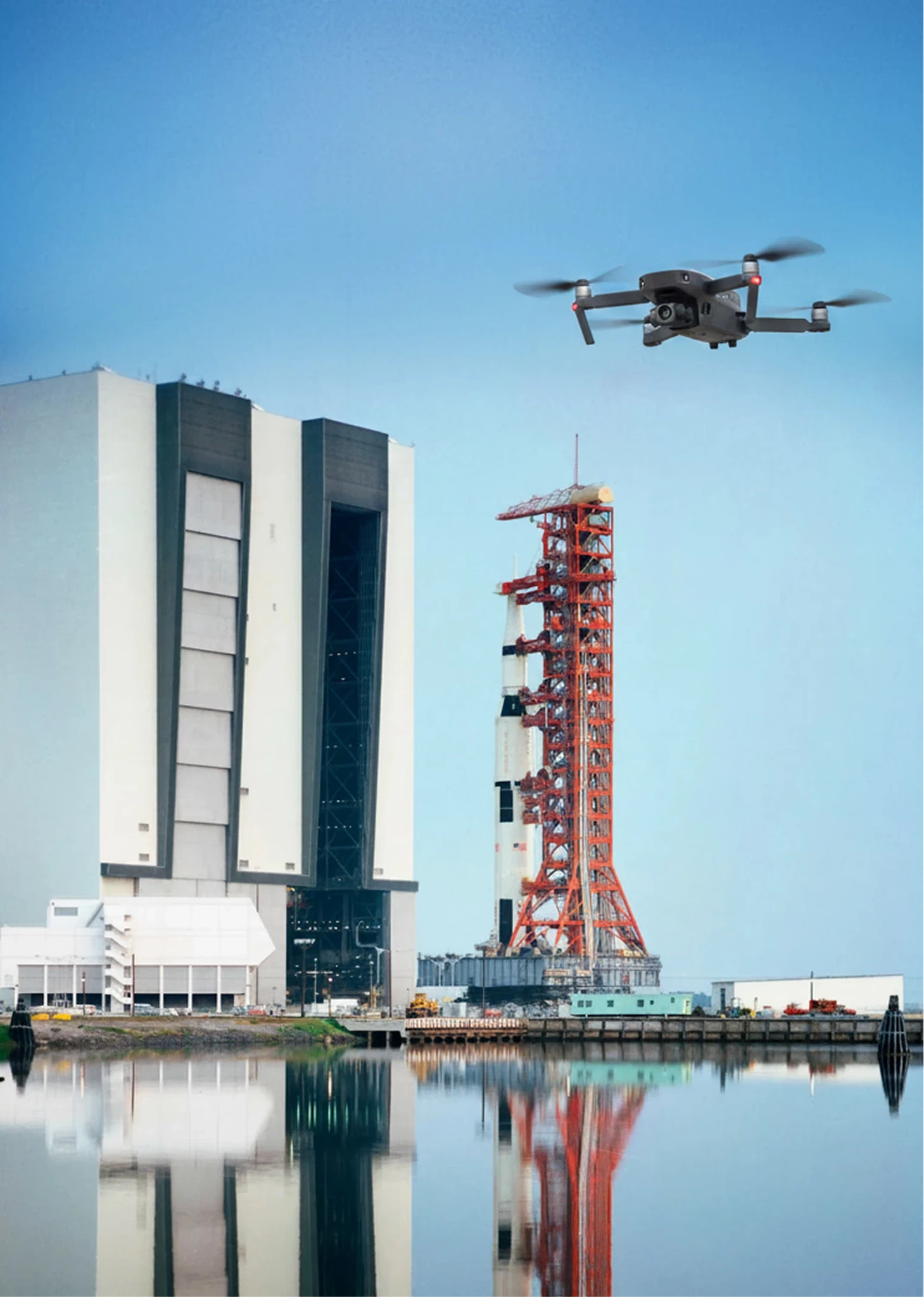
The company faced a growing problem: unauthorized drone activity near sensitive operational areas.
As next-generation launch operations attracted greater public attention, accessible viewing areas and the rapid adoption of commercial UASs increased the risk of unauthorized drone activity near mission-critical infrastructure.
Before SkySafe, the organization relied heavily on security teams visually monitoring the skies and manually locating drone operators. This created a significant blind spot. Security officers were already responsible for a broad range of ground-based issues, making visual drone detection difficult to sustain and nearly impossible to operationalize at scale.
At peak levels, the company observed approximately 3–4 unauthorized drone flights per day near its primary production and launch site. The concern was not only nuisance activity. Unauthorized UASs introduced potential risks to personnel safety, launch vehicle security, critical infrastructure protection, public safety, and mission continuity.
Why SkySafe
The customer selected SkySafe because it needed more than basic drone alerts. It needed a real-time airspace intelligence platform that could support security, operations, and launch coordination across multiple facilities.
The most important capabilities included:
01
Real-time detection and tracking of unauthorized UAS activity
02
Pilot and drone geolocation
03
Support for more than one drone manufacturer type
04
A growing communications protocol library
05
Scalable deployment across multiple sites
06
Cross-site intelligence sharing
07
Integration with internal operational systems
08
A single operational view for both unauthorized and authorized UAS activity
SkySafe’s ability to detect and identify drones across multiple manufacturers was especially important as commercial drone usage continues to diversify beyond a single dominant manufacturer.
The Solution in Operation
SkySafe was deployed to provide real-time monitoring across critical operational sites. Sensor placement was designed to maximize visibility while remaining cost-effective.
At one key production and launch site, strategic sensor deployment enabled active UAS tracking at nearly 40 kilometers from the facility using a single sensor.
The platform quickly became valuable beyond security monitoring. During launch operations, the company regularly coordinates 8 to 15 internal drones at a time for range surveillance, inspections, media content collection, and maritime domain awareness. SkySafe gave teams a unified airspace picture to help deconflict internal UASs, manned aircraft, and unauthorized drone activity.
Security teams use SkySafe to monitor illicit drone activity. Range and Recovery teams use the platform for enhanced airspace awareness during launch operations. Integration with internal tools further embedded SkySafe into the company’s operational workflow.
The Results
20 Mins to 2–3 Mins
Before SkySafe, locating a drone operator could take roughly 20 minutes, assuming the operator could be found at all. That left a significant window for an unauthorized actor to complete surveillance or disrupt operations.
With SkySafe, the company reduced average response time to pilot location to approximately 2–3 minutes. This gave the security team the ability to act quickly, decisively, and with greater confidence.
Airspace Awareness Improved Exponentially
SkySafe gave the company real-time insight into airspace activity surrounding its facilities. What was previously a major blind spot becoming a visible, actionable operational picture. The platform also helped the company identify patterns of repeated interest across sites, supporting broader intelligence and investigations work.
Unauthorized Drone Activity Decreased Significantly
After implementing flight restrictions and SkySafe’s drone detection capability, unauthorized drone activity dropped from approximately 3–4 illicit flights per day to approximately 1–2 per week. This created a safer, more controlled operating environment around sensitive facilities and launch activities.
Launch Operations Became More Coordinated
SkySafe became a launch-day operational tool, not just a security platform. Security, Range, Recovery, and Media teams gained shared visibility into airspace activity. This enabled better deconfliction of authorized UASs, manned aircraft, and unauthorized drones during high tempo launch operations.
The result was more efficient coordination and reduced uncertainty during critical mission windows.
Executive Confidence Increased
The ability to detect, locate, and respond to unauthorized drone activity in minutes gave leadership greater confidence that the organization could protect its people, infrastructure, and mission-critical operations.
SkySafe helped turn drone response from a reactive, manual process into a repeatable operational capability.
Expansion and Continued Investment
Following the initial deployment, the company expanded SkySafe usage across additional sites.
The decision to grow the deployment was driven by:
01
Ease of use
02
Simplicity of deployment
03
Detection accuracy
04
Strong operator feedback
05
Cross-site visibility
06
Integration with existing internal systems
07
Proven value during launch operations
Within months, SkySafe became part of the company’s standard operating procedures. The customer expects continued rollout across additional facilities and future launch sites as its operations expand globally.
Looking Ahead
The company sees continued value in expanding airspace awareness across its broader operational footprint. Future priorities include increasing coverage across additional sites, supporting more custom and home-built UAS protocols, and exploring interagency data sharing with government partners.
As drone activity continues to evolve, the customer views SkySafe as a core capability for maintaining secure, coordinated, and mission-ready airspace.